 North Collin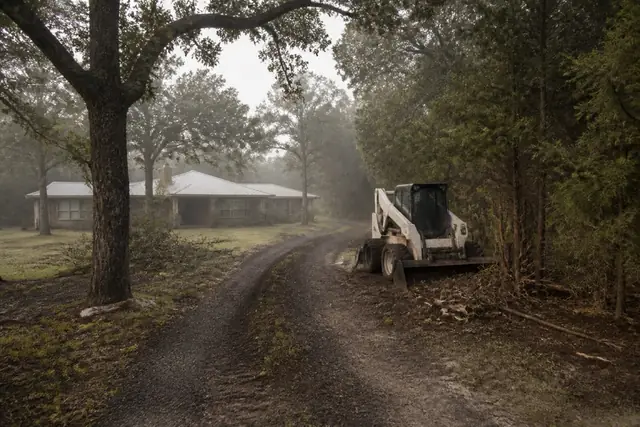

North Collin Tree Pros puts New Hope property owners in touch with a local tree service provider for tree removal, pruning, stump grinding, and storm work across New Hope.
New Hope is a small Collin County town that kept its trees by keeping its lots deep. The town identifies itself plainly as a Collin County municipality and points property questions toward its own zoning and permit materials, and the physical character behind that is a wooded enclave just east of the McKinney city edge — metal-roofed houses set well back, two-track gravel drives, and post oak standing where it always stood.
Cedar is the recurring maintenance job. Eastern red cedar seeds into every unmown edge, and on a deep treed lot that means the drive narrows a little each year, fence lines thicken, and the understory around the good hardwoods fills in with something that will eventually shade them out from below. Clearing it back is straightforward work and it is the highest-value hour on most properties here.
The post oaks are the reason to be careful. They are the slowest, longest-lived, and least forgiving trees on these lots, with wide shallow root systems that resent compaction and root severance and will not tell you about the injury for several years. Anything involving a drive extension, a septic field, a shop pad, or a utility trench should be planned to stay outside their driplines, not routed through them.
Fog, damp, and dense shade make this a slightly different environment from the open prairie a few miles west. Interior deadwood accumulates faster under a closed canopy, lower limbs shade out and die on schedule, and fungal fruiting bodies at a root collar are easier to miss under leaf litter than they would be in a mown lawn. Looking at the base of the big trees once a year is worth the walk.
Cedar, understory, and keeping a drive open
Eastern red cedar is the most successful colonizer of unmown ground in this county, and on a wooded lot it works from the edges inward. Clearing it back from drives and fence lines is inexpensive when done regularly and expensive when left for a decade. While the equipment is on site, it is also the moment to deal with anything on the Texas Invasives plant database that has established itself in the disturbed ground.
The town's permits and zoning material is where zoning and permit questions for a specific parcel start, which matters more here than in a big city because the answers are handled locally rather than through a large development department.
Anything that moves dirt — a drive extension, a pad, a stump — still crosses the statewide threshold in the Railroad Commission damage-prevention rules at sixteen inches of depth, and rural-edge parcels are exactly where undocumented old services turn up.
Post oak on a wooded lot
Post oak is worth the caution it demands. It grows slowly on upland clay, spreads its roots wide and shallow, and responds to root injury on a delay of several years — which means the driveway that was widened in one spring shows up in the crown four summers later. The NRCS soils material on soil compaction explains the underlying mechanism.
Because they are oaks, the wound calendar applies here too. Texas A&M Forest Service asks that oaks not be pruned or wounded between February and June and that every oak wound be painted immediately in any season; the prevention guidance covers both parts, and on a wooded lot most wounds come from equipment rather than from pruning.
Under a closed canopy, the annual look is at the base rather than the crown. Fungal fruiting bodies at a root collar are easy to miss under leaf litter, and the ISA's tree risk management notes describe what is worth noticing and what is ordinary.