 North Collin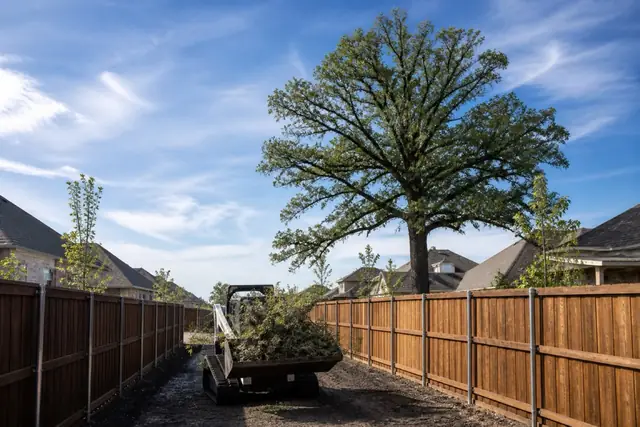

North Collin Tree Pros puts Anna property owners in touch with a local tree service provider for tree removal, pruning, stump grinding, and storm work across Anna.
Anna has an adopted tree-preservation ordinance, which puts it ahead of a lot of towns its size in terms of having a written answer. The ordinance connects tree-removal applications to covered grading and development work and sets out its own exceptions, so the question for a homeowner is less whether trees are regulated and more which category a specific job falls into. The document is public and the city's application checklists sit alongside it.
On the ground, the city is mostly new subdivision pushing north into open prairie, with alleys behind the houses and thin young trees in every yard. Occasionally a block was laid out around a surviving bur oak or a pecan from the pasture, and that tree is now the only real canopy for several hundred feet. Those survivors are worth disproportionate care, because nothing planted today replaces them within the lifetime of anyone living on the street.
Alley access changes the economics of tree work here in a way people do not expect. Where a chipper can back down the alley to the rear fence, brush moves twenty feet instead of a hundred and the labor line shrinks accordingly. Where the alley is blocked, gated, or too narrow for a truck with a chipper behind it, the same job reverts to hand-carrying out the front. Worth checking before the quote is written.
Exposure is the other defining feature. A new subdivision on open prairie has no windbreak, and young trees take the full force of spring straight-line winds and the occasional winter glaze. Staking done right and removed on time, mulch instead of turf, and early structural pruning matter more here than in an established neighborhood where the surrounding canopy takes the edge off the weather.
What the ordinance actually attaches to
Anna's adopted tree-preservation ordinance ties tree-removal applications to covered grading and development activity and states its own exceptions rather than leaving them to interpretation. Reading the adopted text is faster than asking around, and it is the document a provider should be working from as well.
The city's applications and checklists page is where the practical forms live, which matters when a project is genuinely covered and the removal has to be submitted rather than simply scheduled.
Where grading is involved at all, the sixteen-inch excavation threshold in the state damage-prevention rules comes into play as well. Stump removal and pad work both cross it, and rural-edge parcels tend to hide services that no current map records.
The one big tree on the block
A surviving pasture oak or pecan in a new subdivision is carrying the entire block's canopy value and none of its own former growing conditions. Protecting it means keeping traffic and storage out of the root zone, mulching wide rather than mowing to the trunk, and watering deeply through the first several summers after construction. The ISA's mature tree care notes cover the whole regimen.
If it is an oak, the wound rule applies with force. Texas A&M Forest Service asks that oaks not be wounded from February through June and that every oak wound be painted immediately in any season — and on a construction-adjacent lot, most wounds are accidental rather than scheduled. The oak wilt prevention guidance is the reference worth handing to anyone working near it.
For the young trees around it, mulch does more per dollar than anything else available. The ISA's mulching guidance notes give the depth and the one rule people break: keep the material off the trunk, always.