 North Collin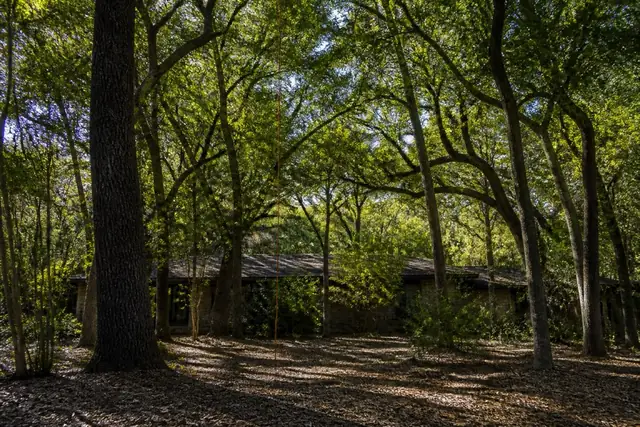

North Collin Tree Pros puts Fairview property owners in touch with a local tree service provider for tree removal, pruning, stump grinding, and storm work across Fairview.
Fairview is the rare place in this county where the native canopy survived the growth. The town's adopted future land use plan puts rural heritage and large-lot residential character at the center of its planning outside the commercial district, and the physical result is exactly what that language promises: half-acre and larger lots under dense native post oak and blackjack oak, with leaf litter instead of sod under much of it.
That canopy is also the most fragile thing on the property. Post oak and blackjack are upland species that build wide, shallow root systems and have almost no tolerance for having them disturbed. They do not respond to injury the way an elm or a hackberry does — they respond four years later, in the crown, and they do not come back. Any project that puts a machine, a trench, or a stockpile inside a dripline here needs to be planned around the tree rather than through it.
The work these lots actually need is modest and specific. Deadwood removal, which native oaks produce steadily as the canopy closes and lower limbs shade out. Clearance where a limb has grown onto a roof or across a drive. Hazard assessment on anything over a structure. What they do not need is thinning for its own sake, which on a post oak is a stress event dressed up as maintenance.
Irrigation is the quiet threat on the improved lots. A native oak that spent a century on dry upland clay is not adapted to the daily shallow watering a lawn wants, and turf irrigation under a mature post oak keeps the root collar at a moisture level that suits pathogens better than the tree. Where a lawn has been installed under native canopy, adjusting the heads and mulching wide is often the single most valuable thing available.
Working under native oaks without killing them
The town's future land use plan sets rural heritage and large-lot residential character as the planning frame outside the commercial district, which is the reason this canopy still exists at the scale it does. Keeping it is a maintenance problem more than a policy one now.
Post oak's intolerance of root disturbance is the governing fact for every project on these lots. Compaction closes the pore space that roots depend on and does not recover on a useful timescale, which the NRCS soils material on soil structure sets out directly. Fencing at the dripline before work starts is the entire mitigation.
Because these are oaks, every wound matters and the calendar applies. Texas A&M Forest Service asks that oaks not be pruned or wounded from February through June and that every oak wound be painted immediately in any season — the oak wilt prevention guidance covers both halves of the rule.
Deadwood, leaf litter, and the temptation to tidy
A closed native canopy sheds its lower limbs as they lose light, so deadwood on the ground and in the crown is normal biology rather than a sign of decline. What is worth removing is deadwood over a driveway, a roof, or a walkway; what is worth leaving is the rest. The ISA's mature tree care notes describe the difference between managing risk and manicuring a woodland.
The leaf litter is doing work. Left in place across the root zone, it is the mulch layer these trees evolved under, and it moderates soil temperature and moisture better than anything sold in a bag. The ISA's mulching guidance notes cover depth and the one hard rule — nothing against the trunk.
Where a large native oak sits over a house, an assessment is worth more than a pruning cycle. The state forest service's Can My Tree Be Saved? guide gives the framework for judging crown, trunk, and root condition on a specimen that is worth real effort to keep.