 North Collin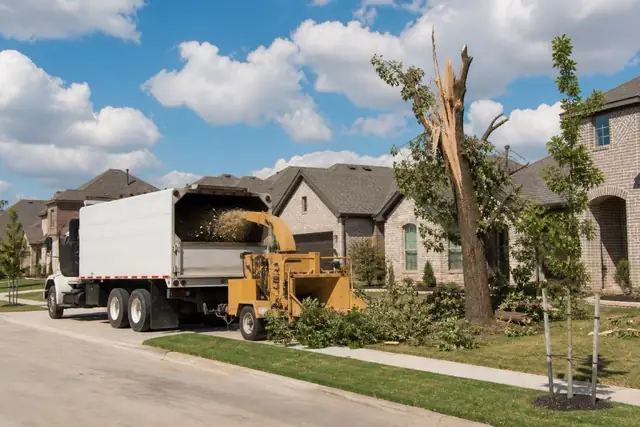

North Collin Tree Pros puts Melissa property owners in touch with a local tree service provider for tree removal, pruning, stump grinding, and storm work across Melissa.
Melissa's growth has come in tight, affordable phases along the highway corridor, and the tree stock reflects it: rows of young, similar-aged trees planted at the same time by the same builder, in yards without established canopy to fall back on. When one fails, the gap is obvious from the street, and when a storm rolls through, several fail at once because they are the same species at the same stage.
The city publishes a tree-removal permit form and ties tree matters to its development and engineering standards, which puts Melissa among the neighbors where the paperwork question has a documented answer rather than a verbal one. Pulling the form and reading what it asks for is a five-minute task that clarifies whether a given removal is routine or requires review, and it is far better done before the quote than after the stump.
Ornamental pear is the recurring casualty in neighborhoods of this vintage. Planted heavily for fast growth and spring bloom, it carries tightly clustered branch unions with included bark and reliably splits under ice or a hard straight-line wind. Removal after a split is straightforward; the better conversation is which trees to reduce or replace before the next glaze event rather than after.
For everything else, the work is establishment care done properly. A young tree in a Melissa yard usually needs three things nobody sold with the house: a mulch ring instead of grass against the trunk, deep infrequent water in place of the daily sprinkler cycle, and one light structural pruning every couple of years while the cuts are still small enough to seal quickly.
The paperwork, and where to find it
Melissa publishes a tree removal permit form alongside its development materials, which is unusually straightforward compared with hunting through an ordinance. Reading what the form asks for tells you immediately whether your situation is covered or routine.
The broader context sits in the city's engineering standards and development tools, where landscape and tree provisions attach to covered development work. For a homeowner the distinction that matters is between maintenance on an existing yard tree and anything tied to grading, construction, or a plat condition.
If a tree is coming out because it is failing rather than because it is inconvenient, the state forest service's Can My Tree Be Saved? guide is worth reading first — occasionally it changes the answer, and it always improves the conversation with whoever quotes the work.
Why the pears keep splitting
Ornamental pear grows fast, blooms early, and builds a structure that cannot hold itself up. Branches emerge in tight whorls at nearly the same point on the trunk, with bark trapped in the unions instead of connective wood, so the tree accumulates a set of built-in failure planes as it gains weight. Texas A&M Forest Service's pruning material explains why early structural cuts are the only real remedy.
Ice is the local trigger rather than wind. Dallas-Fort Worth normals for 1991 to 2020 list only 1.6 inches of annual snowfall, but the Fort Worth office's normals and records show that the memorable North Texas winter events are glaze rather than snow, and a quarter inch of ice on every twig is exactly the load these unions cannot carry.
The practical options are reduction now or replacement now. Where a pear is still small, weight reduction and removal of the worst competing stems buys years. Where it has already split, the tree rarely recovers a sound structure, and the ice damage notes on assessing damage are a fair guide to when to stop investing in it.