 North Collin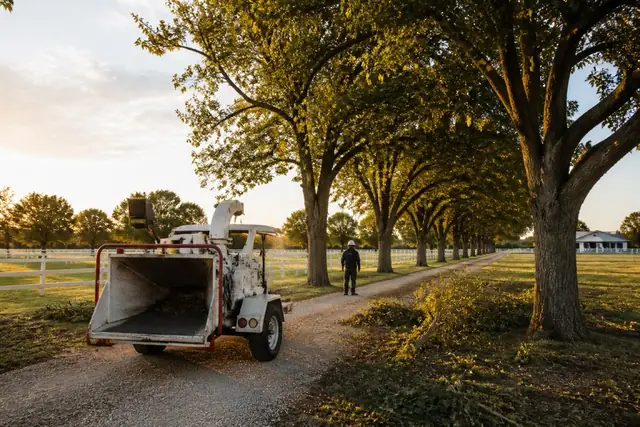

North Collin Tree Pros puts Lucas property owners in touch with a local tree service provider for tree removal, pruning, stump grinding, and storm work across Lucas.
Lucas planned itself around space. The city's adopted comprehensive plan describes estate-style housing on large lots, agricultural remnants, and open space, with a boundary running along Lavon Lake — and that combination shapes every tree job inside it. Long gravel drives lined with cedar elm, hay pasture behind the fence, and a lake edge that changes both the vegetation and the ground conditions within a few hundred feet.
Room is the great advantage here. Where a tree can be felled into open pasture instead of dismantled over a fence, hours come off the job and the price follows. Wood can be cut where it lands, a chipper can set up beside the work rather than at the street, and brush travels feet instead of a hundred yards. Any quote on an acreage lot should reflect that, and if it does not, it is worth asking why.
The lake edge is a different environment from the uplands three minutes away. Ground stays wetter longer, the species mix shifts toward the bottomland trees — pecan, bur oak, cottonwood, willow — and saturated soil undercuts anchorage in a way that upland clay does not. A tree that has stood forty years beside water can tip in a wet spring with no wind event to blame, and a lifted crescent of soil behind a lean is the sign to act on.
Drive-line elms are the recurring maintenance job. Cedar elm planted or volunteered along a two-hundred-foot gravel drive grows into the vehicle envelope from both sides, sheds interior twigs constantly, and accumulates deadwood over the one route everyone uses daily. Crown cleaning and clearance on a three-to-five-year cycle handles it; waiting until a limb comes down on a truck does not.
Acreage economics: why open ground costs less
Two variables dominate the price of any removal: whether there is a drop zone, and how far material has to travel. An estate lot usually supplies both answers favorably. The exception is ground condition — Blackland clay that carries a loaded truck in October will not in April, and the NRCS soils material explains why saturated clay loses bearing capacity so sharply.
Overhead service to a house set well back from the road is the constraint that most often complicates an otherwise simple acreage job. A long private drop crossing the work area is treated exactly like any other energized conductor, and the ISA's trees and utility conflicts guidance covers why that clearance is not negotiable.
Anything involving stumps, trenching, or pad work still triggers the statewide damage-prevention rule: an 811 notice is required before earth moves past sixteen inches, and rural properties routinely hide old water lines, septic laterals, and abandoned services.
Trees near the water behave differently
The city's comprehensive plan describes the community's large-lot pattern, agricultural remnants, and its boundary along Lavon Lake, which is a useful reminder that a single municipality here contains genuinely different growing conditions. Bottomland trees near the water and upland oaks a mile inland are not the same maintenance problem.
Saturated ground is the mechanism to watch. When the top foot and a half of clay is waterlogged, the soil holding a root plate loses shear strength and a crown that has caught wind for decades suddenly has nothing anchoring it. Texas A&M Forest Service's trees and flooding guidance covers the aftermath and why a tipped tree rarely re-establishes.
After any prolonged wet spell, walking the base of the large trees near water is worth the ten minutes. Cracked or mounded soil on the side opposite a lean is the clearest ground-level evidence that a root plate has moved, and it puts the tree on the risk management list rather than the watch list.