 North Collin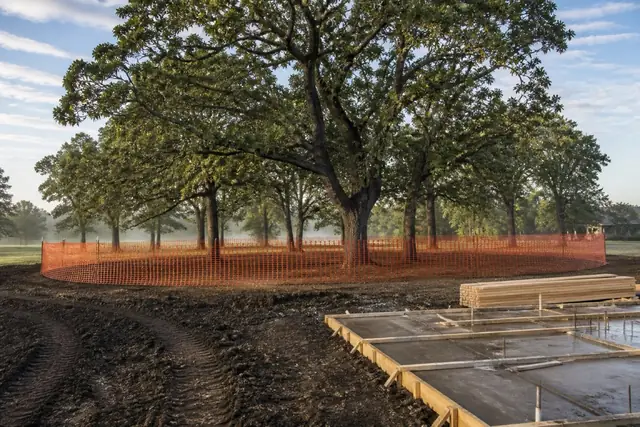
North Collin Tree Pros puts McKinney property owners in touch with a local tree service provider for post oak preservation in McKinney and the north Collin County towns around it.
Post oak is the tree that makes an older lot in Fairview, New Hope, or the wooded edges of McKinney worth what it is worth, and it is also the tree least able to survive what people do to a lot. It grows slowly on thin upland soil, spreads a wide and shallow root system to compensate, and has almost no tolerance for having that root system disturbed. A post oak does not object at the time. It objects four years later, in the crown, permanently.
The list of things that kill them is short and predictable. Grade changes, in either direction — six inches of fill over the root zone suffocates it, and cutting six inches off removes the layer where the roots live. Trenching through the root plate for a utility or an irrigation main. Equipment parked in the shade during a build. Compacted soil under a new driveway that widened by four feet. Each is a single afternoon's decision with a decade-long consequence.
Irrigation is the one that surprises homeowners, because it feels like care. A post oak adapted to dry upland clay does not want the daily shallow watering that keeps a fescue lawn green, and turf irrigation under a mature specimen keeps the root zone at a moisture level that suits root pathogens far better than it suits the tree. Where a lawn and a post oak share ground, the tree loses slowly, and the usual fix is a wide mulched ring with the sprinkler heads adjusted out of it.
Preservation is therefore mostly restraint plus fencing. Orange fencing set out at the dripline ahead of any machine, a written no-traffic and no-storage rule inside it, mulch across the protected zone, root pruning done with a saw rather than a bucket where a trench is genuinely unavoidable, and no grade change inside the fence. It is not expensive. It is only worth anything if it happens before the work starts rather than after somebody notices the ruts.
Why the damage takes four years to appear
A mature tree runs on stored reserves. Sever or suffocate a share of the absorbing roots and the crown carries on for several seasons out of storage, looking normal while the balance quietly runs down. Then a dry summer arrives, the reserves are not there, and the tree thins from the outside in. By the time the crown tells the story, the cause is several years back and usually paved over. The Can My Tree Be Saved? framework from the state forest service is a useful way to grade what is left.
The soil under most of this county makes the effect worse rather than better. Blackland clay has little pore space to begin with, and compaction closes what there is, so oxygen and water reach the root zone through a narrower door every year. The NRCS material on soil structure and compaction explains the mechanism directly.
Where the tree is already stressed, the ordinary care items matter more than usual. The ISA's mature tree care notes cover the root-zone protection, watering, and restraint on crown work that give a compromised specimen its best chance.
A protection plan that actually gets followed
Fencing at the dripline, not the trunk. Signage on the fence stating no traffic, no storage, no washout. Four inches of coarse mulch inside it. A single designated equipment route on the property that everyone uses. Clean saw cuts wherever a root has to be severed, rather than tearing with a bucket. Nothing on that list is difficult; the whole trick is that it exists in writing before the first delivery arrives.
Timing helps too. If any pruning is part of the plan, the state's oak wilt guidance asks that oaks not be wounded between February and June, and that any wound — pruning cut, storm break, or equipment scrape — be painted immediately whenever it happens. On a construction site that second half matters more, because scrapes are not scheduled.
Where a post oak is being kept on a lot inside the city, the city's tree preservation page is the place to confirm what protection or permitting the ordinance requires, since preservation requirements and removal requirements often live in the same section of the code.